Game Over GBV : l'esport contre la violence basée sur le genre
Par Sophia Nei
Article disponible en anglais — version française à venir.
Gaming for Good
When most people think of gender-based violence prevention, they imagine workshops in church halls, government posters in clinics, or NGOs running awareness drives. They do not, generally, imagine an esports tournament.
But that's exactly the point.
The Game Over Gender-Based Violence initiative combined competitive gaming with digital safety education, proving that gaming can be a powerful tool for social impact, and that meeting young people where they actually are is more effective than asking them to come to you.
Why Gaming Was the Vehicle
The young people most at risk of online harassment, cyber-stalking, and digital forms of GBV are the same young people spending hours a day on phones, in Discord servers, and in competitive gaming spaces. The conversation about safety has to happen there, in the language they already speak, not in formats and venues built for an older generation that experienced harm differently.
Esports gave us a reason for them to show up. Digital safety gave us a reason to keep them in the room.
The Event
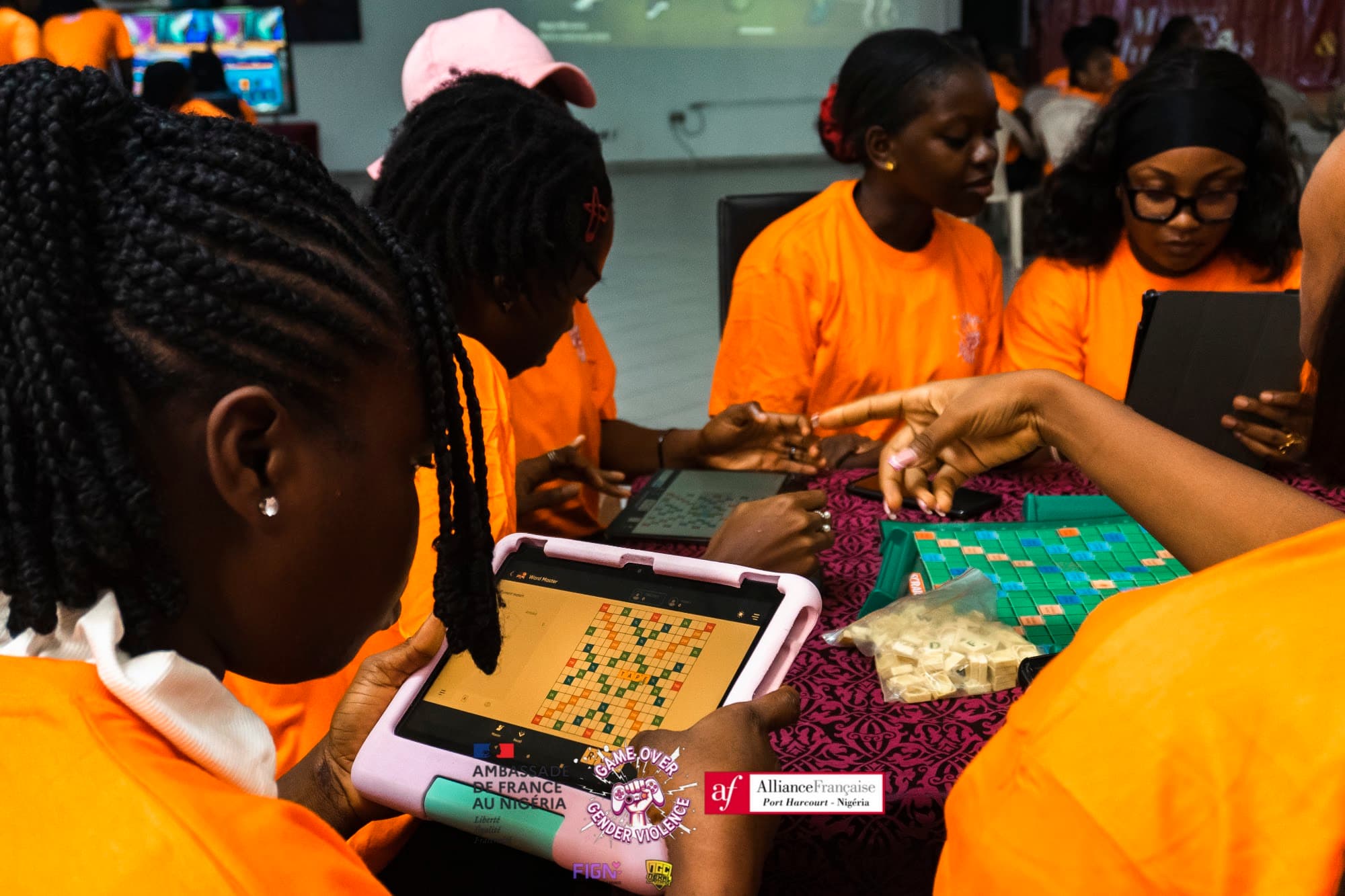
Co-organized with Alliance Française Port Harcourt and sponsored by the French Embassy in Nigeria, the event was part of the global 16 Days of Activism Against Gender-Based Violence, the worldwide push between November 25 and December 10 to raise awareness and drive action against GBV.
What We Did
- Young people from schools and universities took part
- Digital safety workshops taught practical strategies for protecting yourself online: privacy settings, recognizing harassment patterns, what to do when something happens, and who to report to
- Esports tournaments brought competitive energy and made the event something young people wanted to attend
- We awarded medals and a ₦300,000 prize pool
- The day was covered by The Tide newspaper, helping the conversation reach beyond the room
What People Took Away
For many attendees, the workshops were the first time someone had spoken to them directly about online safety in a way that took their digital lives seriously, not as a distraction from "real" problems, but as a real space where real harm happens, and where real protection is possible.
For others, the tournaments were a first taste of competitive play. For a few, both at once: a new skill and a new framework for thinking about safety in spaces they already love.
The Bigger Picture
Gender-based violence affects women across Africa, including through digital GBV such as harassment, doxxing, image-based abuse, and cyber-stalking. Awareness work can reach people more directly when it meets them on familiar ground.
Esports is one of those grounds. Gaming culture in Africa is large, growing, and disproportionately young. Using it as an entry point for conversations about safety, consent, and community standards is not a gimmick. It's a strategy.
It's also a strategy with longevity. The young people in that room are going to be in gaming spaces for the next decade or more. Equipping them now, with the language and the tools, pays off every time they step into a new community.
Thank You
Huge thanks to Nexal Gaming, Daimyo Arena, and the volunteers who made the event run. Thanks to Alliance Française and the French Embassy for backing the vision and resourcing the work. And thanks to everyone who showed up to play, and stayed for the conversations that mattered.
This is the kind of work we want to keep doing. If you or your organization wants to bring an event like this to your school, university, or community space, get in touch at femalesingamingnetwork@gmail.com.
Partager cet article